


28/03/2026

Share:
28/03/2026
Share:

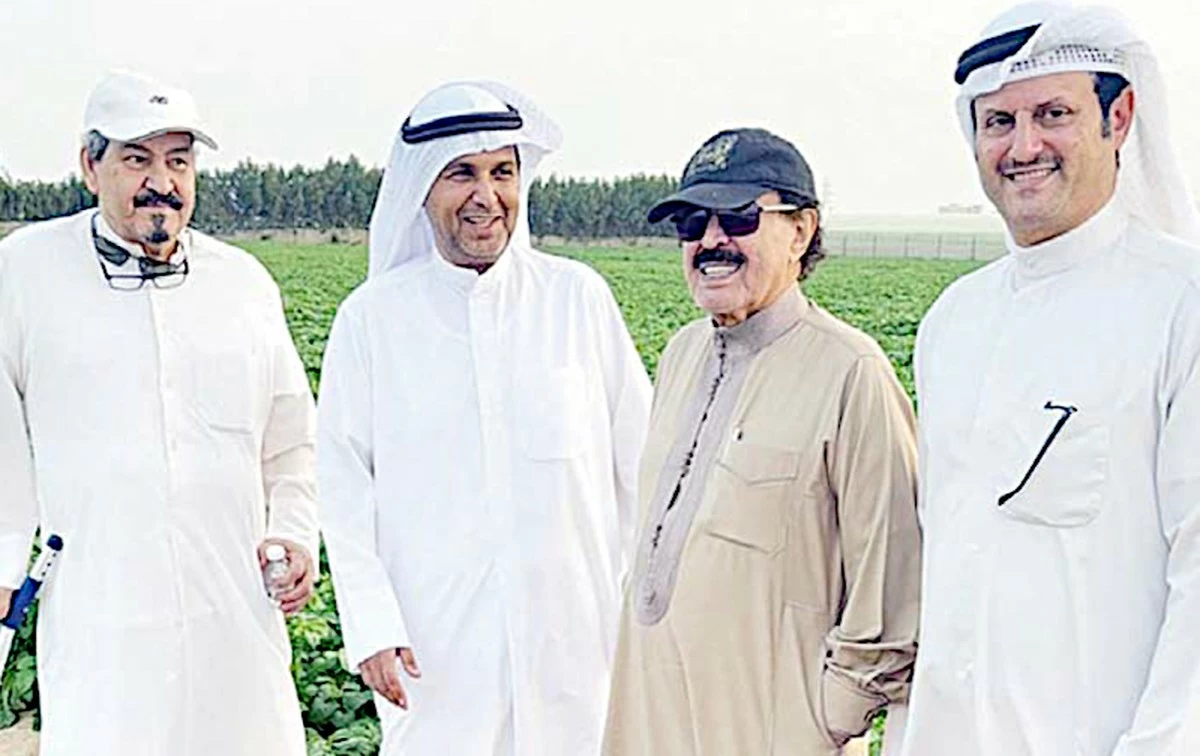
Ahmed Al-Jarallah with Mohammed Ali Al-Mutairi, Ahmed Al-Aswad, and colleague Saud Al-Farhan at a Wafra farm.
KUWAIT CITY, March 28: Dean of Kuwaiti journalism and Editor- in-Chief of Arab Times and Al-Seyassah newspapers, Ahmed Al-Jarallah, visited the farms of Mohammed Ali Al-Mutairi in Wafra Agricultural area late last week, accompanied by journalists Saud Al-Farhan and Ahmed Al- Aswad. Al-Jarallah observed the agricultural operations at Mohammed Ali Al-Mutairi’s farms, from planting seedlings to harvesting and preparing crops for local markets, particularly field potatoes and four-tiered strawberries grown in refrigerated agricultural complexes.
Al-Jarallah expressed his admiration for the development taking place in agricultural areas, especially in Wafra and Abdali. He emphasized the importance of fresh Kuwaiti agricultural products, particularly potatoes, onions, corn, and dates, in achieving a measure of food security. Al-Jarallah also highlighted the role of the agricultural sector in diversifying income sources and stimulating the national economy. He stressed the significant benefits of productive agriculture along Kuwait’s northern and southern borders, and called on the government, the public, and investors to give it greater attention.
Al-Jarallah commended the visits of the First Deputy Prime Minister and Minister of Interior, Sheikh Fahad Al-Yousef, to several farms in Wafra and Abdali, expressing optimism that these visits would yield positive results.
He also expressed appreciation for Sheikh Fahad Al-Yousef’s visits to local agricultural produce marketing centers in Sulaibiya and Ardiya, as well as to farmers’ markets in Andalous, Ruqai, Fahad Al-Ahmad, and Jahra. Meanwhile, Mohammed Al- Mutairi, owner of a highly productive farm in Wafra, emphasized the importance of a clean and diverse nursery in achieving high-quality agricultural production in large quantities throughout the year.
Al-Mutairi stated that farming is both rewarding and enjoyable, provided the farmer has passion, dedication, and a professional approach to agriculture and marketing. He affirmed that Kuwaiti farms produce approximately 20 varieties of potatoes, continuously improving in shape, weight, and quality thanks to the commitment of most Kuwaiti farmers to using the most advanced and sophisticated agricultural materials and supplies. Al-Mutairi emphasized the farmers’ dedication to using the best types of seeds, seedlings, and fertilizers, as well as their continuous adoption of the latest prevention and care methods. He stressed that the experience of Kuwaiti farmers accumulates season after season, enhancing both the quantity and quality of their produce. Al-Mutairi explained that he cultivates potatoes twice a year.
The first planting uses local potato seeds stored from May to October, while the second planting relies on imported virgin potato seeds from France, South Africa, the Netherlands, and the United States. He noted that Kuwaiti farmers could supply local table potatoes to consumers if the Kuwaiti Farmers Union or other agricultural associations and unions established refrigerated storage facilities to preserve the increased production during April, May, and the summer months. Al-Mutairi stressed the importance of paying attention to semistrategic crops such as potatoes, garlic, onions, corn, pumpkins, and dates.
By Adnan Makkawi Jarada Al-Seyassah/Arab Times Staff