



25/08/2026

Share:
25/08/2026
Share:

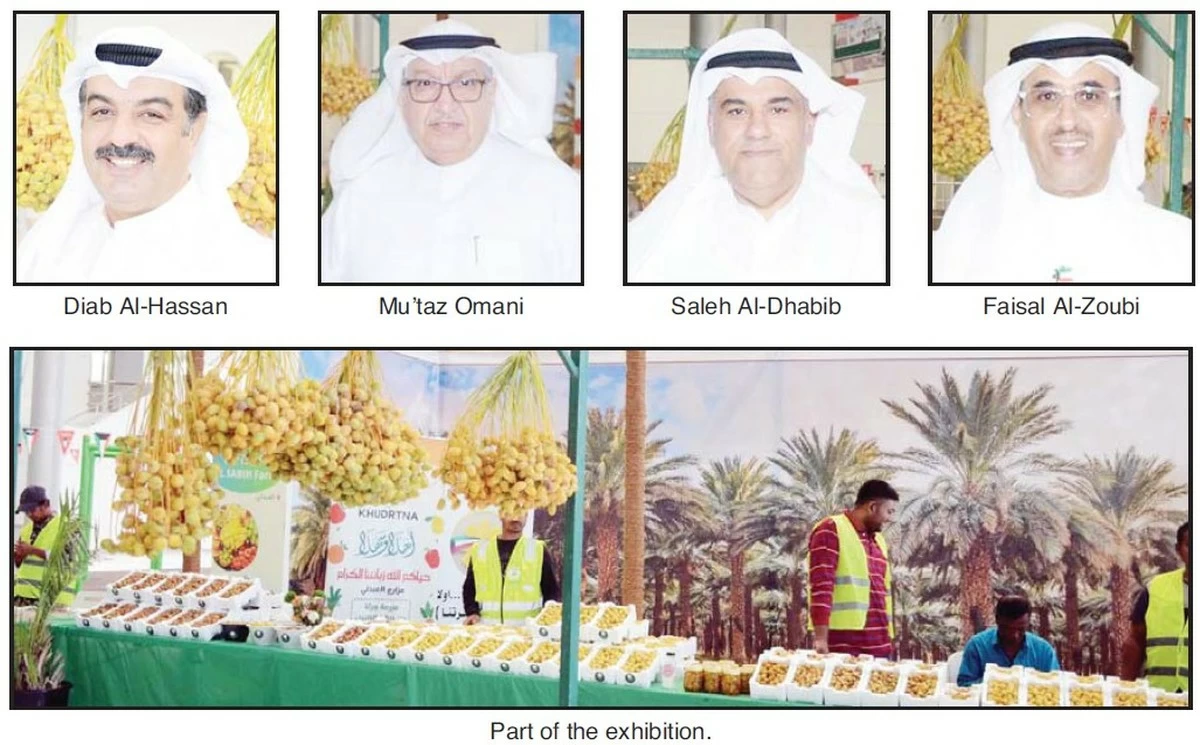
KUWAIT CITY, Aug 25: A tour of the fourth edition of the Al-Abdali Dates and Figs Exhibition was held at the Livestock Company Hall, with the participation of approximately 45 farmers. The exhibition witnessed brisk sales and growing demand for locally produced dates and figs. Several farmers were interviewed about sales volumes, prices, crop varieties, and the journey of the produce from the farm to the points of sale. Faisal Al-Zoubi, supervisor of the Al-Abdali farm at the Livestock Company Hall, affirmed that the Al-Abdali Exhibition is witnessing a remarkable turnout for local products, as some varieties sell out before the end of the daily sales hours, which run from 9:00 am to 5:00 pm.
He explained that the exhibition features a wide selection of date varieties, including Wanana, Red Sukkari, Barhi, Medjool, Sagai, and Khalaas, in addition to around five varieties of figs, most notably “Asal Brown,” Turkish, Spanish, and Jassim figs. The demand is concentrated primarily on “Asal Brown” figs, while Khalaas, Barhi, Medjool, and Wanana are among the most sought-after date varieties among consumers. The most distinctive feature of local produce is its freshness, as the dates and figs are harvested on the same day and transported directly from the Al-Abdali farms to the exhibition hall, without undergoing the lengthy refrigeration and transportation processes typically required for imported products.
Al-Zoubi emphasized that Kuwaiti farmers have proven their competence and ability to provide agricultural and food products, both during the COVID-19 pandemic and amid the challenges posed by geopolitical instability to global supply chains. They recently faced difficulties in securing some production inputs, including fertilizers, but managed to overcome these challenges by finding alternatives and maintaining production. He noted that the Dates and Figs Exhibition is being held for the fourth consecutive year as part of a series of events aimed at supporting farmers and marketing their products. Al-Zoubi also announced plans to hold a vegetable festival in approximately six weeks, which will continue for around eight months at the same venue. He called on the public to visit the exhibition and learn more about the produce of Kuwaiti farms, stressing that buying local products represents direct support for farmers and encourages them to continue their work and increase production.
Meanwhile, farmer Saleh Bader Al-Dhabib affirmed that the Al-Abdali Dates and Figs Exhibition represents an important outlet for marketing local produce, especially for small farmers who face difficulties accessing commercial markets. Al-Dhabib stated that the Al-Abdali farms produce approximately 120 varieties of dates, while participating farmers are showcasing around 12 highly sought-after varieties, including Barhi, Khalaas, Rathana, Sagai, Samran, Zamiliya, and Medjool, in addition to about six varieties of figs. He explained that the products undergo monitoring and inspection from the farm to the exhibition. Oversight is carried out by the participating farmers themselves, in addition to official monitoring by the Public Authority for Food and Nutrition (PAFN), the Ministry of Commerce and Industry, and Kuwait Municipality.
Monitoring begins during the date palm pollination season, which typically takes place in March and April, depending on weather conditions. Regular visits are then conducted every two to three weeks to ensure the quality of the produce and its compliance with the participation requirements. The participation requirements include the farmer owning the displayed products, ensuring that the fruit comes from their own farm, and providing transportation to the exhibition site. Al-Dhabib confirmed that PAFN conducts direct supervision at the exhibition hall, noting that farmers obtain the necessary permits before displaying their products. He revealed that the price of a kilogram of Barhi dates is around half a dinar, while some rare or premium varieties range from one to one and a half dinars per kilogram.
Al-Dhabib confirmed that prices have remained relatively stable since the start of the exhibition. He noted that farmers are looking to explore opportunities to export surplus production in the future, particularly Barhi and Medjool dates to the Saudi market, pointing out that the quality of some local varieties gives them a competitive advantage in regional markets. Furthermore, farmer Mu’taz Saud Al-Omani, one of the festival organizers, said the exhibition represents an important outlet for Al-Abdali farmers to market their produce, and praised the Livestock Company’s initiative to host farmers and bring their products together in one location. Al-Omani explained that production this season was lower than last season due to unusual weather conditions. Rainfall extended into late April and May, affecting the ripening of some fruits.
The fruit on some date palm trees has not yet reached maturity. He pointed out that the festival allows consumers to see a wide variety of dates, including Barhi, Khalas, Samran, Zamiliya, Ibrahim, and Medjool, in addition to various fig varieties. Al-Omani emphasized the importance of presenting and packaging local produce in an attractive manner to consumers, noting that some farmers offer small incentives to buyers, such as adding another variety for them to try. He also stressed the crucial role of the media in introducing the public to local products, indicating that some exceptional varieties are not readily available in the markets. Moreover, farmer Diab Al-Hassan confirmed the success of local cultivation and production of “Jassim figs,” describing them as a 100 percent Kuwaiti product. Al-Hassan stated that the exhibition represents an important outlet for farmers to showcase and market their produce directly to consumers. He explained that the benefits of figs are not limited to eating them fresh, as they can also be dried or processed into jam and other products.
Several farmers have already begun utilizing the crop to produce processed products. The price of a box of figs starts at one dinar and reaches a maximum of 2.5 dinars, while its weight ranges from approximately 950 grams to 1.1 kilograms. Al-Hassan revealed plans to expand the cultivation and production of rare or high-demand varieties, including white okra and Spanish broccoli, in addition to other products currently being developed for future release. In addition, farmer Fahad Abdulrahman Al-Duai confirmed that his participation extends beyond selling fresh produce to include processing products on the farm, which adds value to local produce and extends its shelf life.
Al-Duai revealed that the farm produces date syrup, fig jam, and dried figs, confirming that the processed products are in high demand among consumers. He expressed his hope for additional marketing outlets, whether through cooperative societies or other channels, to reach a wider consumer base. Al-Duai called for the establishment of permanent outlets for selling these products so that the marketing of local produce is not limited to seasonal festivals.
Furthermore, farmer Saleh Al-Dubaib revealed that he has entered into an Egyptian-French-Kuwaiti partnership for the import, cultivation, and distribution of potatoes. Indicating that the venture began in 2026, he revealed that he has become the product’s agent in Kuwait. He affirmed that the venture benefits from agricultural expertise available in Egypt rather than relying entirely on imports from European markets.
Al-Dubaib stated that the first shipment for the Kuwaiti market is approximately 50 tons, emphasizing that quantities will gradually increase according to market needs and demand for the product. He stressed that date prices at the exhibition have remained relatively stable since the beginning of the event. Al-Dubaib said the price of a kilogram of Barhi dates is approximately half a dinar, while prices for some premium or rare varieties range between one and one and a half dinars per kilogram. He emphasized the farmers’ commitment to offering local produce at affordable prices for consumers. Also, farmer Diab Al-Hassan affirmed the farmers’ commitment to keeping fig prices accessible to consumers, explaining that the price of a small package starts at one dinar and reaches a maximum of 2.5 dinars. The package weighs approximately 950 grams to 1.1 kilograms, depending on its size. He stressed that the goal is to provide consumers with a local product of both quality and affordability.
By Marwa Al-Bahrawi Al-Seyassah/Arab Times Staff