



03/02/2026

Share:
03/02/2026
Share:
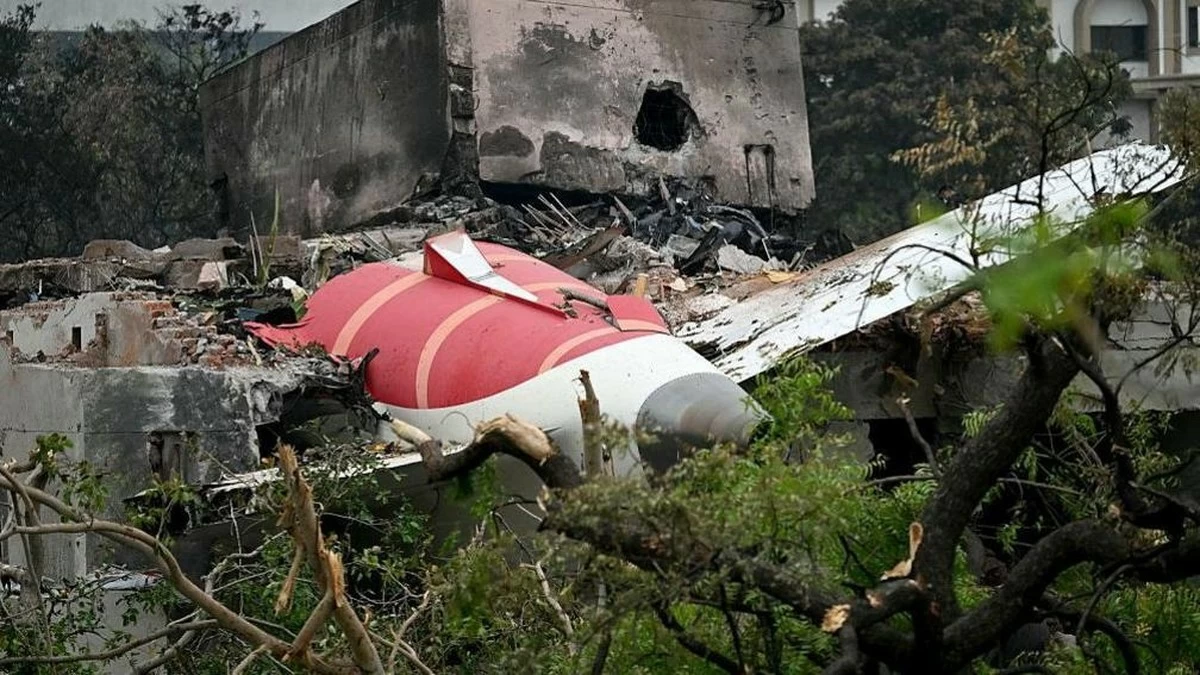

NEW DELHI, Feb 3: Air India has grounded a Boeing 787 Dreamliner after a pilot reported a problem with a fuel control switch, a component at the centre of an ongoing investigation into a fatal Air India crash last year, the airline said on Monday.
“We have grounded the said aircraft and are involving the OEM to get the pilot’s concerns checked on a priority basis,” Air India said, adding that the issue has been reported to India’s aviation regulator. Boeing and India’s civil aviation ministry, which oversees the regulator, did not immediately respond to a Reuters request for comment.
The Tata Group and Singapore Airlines-owned carrier has been under intense scrutiny since a Dreamliner crash in June last year killed 260 people. A source briefed on U.S. officials’ early assessment of evidence told Reuters last year that cockpit voice recordings from the June 12 Air India flight suggested the captain cut fuel flow to the aircraft’s engines.
The aircraft grounded this week was a Boeing 787-8 Dreamliner operating flight AI132 from London Heathrow to Bengaluru. It was withdrawn from service after a pilot reported a technical issue involving the left engine during start-up. According to the report, the left engine’s fuel control switch failed to remain in the “RUN” position and repeatedly moved to “CUTOFF” during the engine start procedure. The aircraft was removed from service as a precaution.
An Air India spokesperson confirmed that the original equipment manufacturer (OEM) has been engaged to examine the issue on a priority basis and that the matter has been reported to the Directorate General of Civil Aviation (DGCA). “We have withdrawn the aircraft from service and are working closely with the OEM to address the pilot’s concerns at the earliest,” the spokesperson said, reiterating that passenger and crew safety remains the airline’s top priority.
Boeing said it is coordinating with the airline. “We are in contact with Air India and are supporting their review of this matter,” the aircraft manufacturer said in a statement.
Air India said it had previously checked fuel control switches across its entire Boeing 787 fleet in compliance with a DGCA directive issued last year and found no anomalies. The airline began another round of inspections on January 31, 2026, after a pilot reported a potential defect in a fuel control switch the previous day. Sources said inspections of about half the fleet have been completed with no faults found, and checks on the remaining aircraft are continuing.
The airline said the issue has been escalated to Boeing for priority assessment and that no adverse findings have emerged so far from the precautionary, fleet-wide re-examination of the fuel control switches.
Earlier, another Air India Boeing 787-8 had also been grounded following a pilot’s report of a possible fuel control switch defect. The airline said that the incident was likewise reported to the DGCA and that it is working with the OEM to prioritise resolution.
In response to the latest incident, the Federation of Indian Pilots (FIP) called on the DGCA and the Aircraft Accident Investigation Bureau (AAIB) to investigate possible electrical faults in Boeing 787 aircraft. FIP President Captain C.S. Randhawa said this was the third recorded case of uncommanded movement of fuel control switches on a Boeing 787.
Speaking to ANI, Randhawa cited a February 17, 2019, incident involving an ANA Boeing 787-8 aircraft landing at Osaka, where both fuel control switches moved to the cutoff position automatically due to an electrical malfunction of the Throttle Control Malfunction Accommodation (TCMA) system. He said a similar theory has been raised in relation to the Air India crash on June 12 at Ahmedabad, adding that the latest case again involved uncommanded movement of the fuel control switches.