



08/09/2026

Share:
08/09/2026
Share:

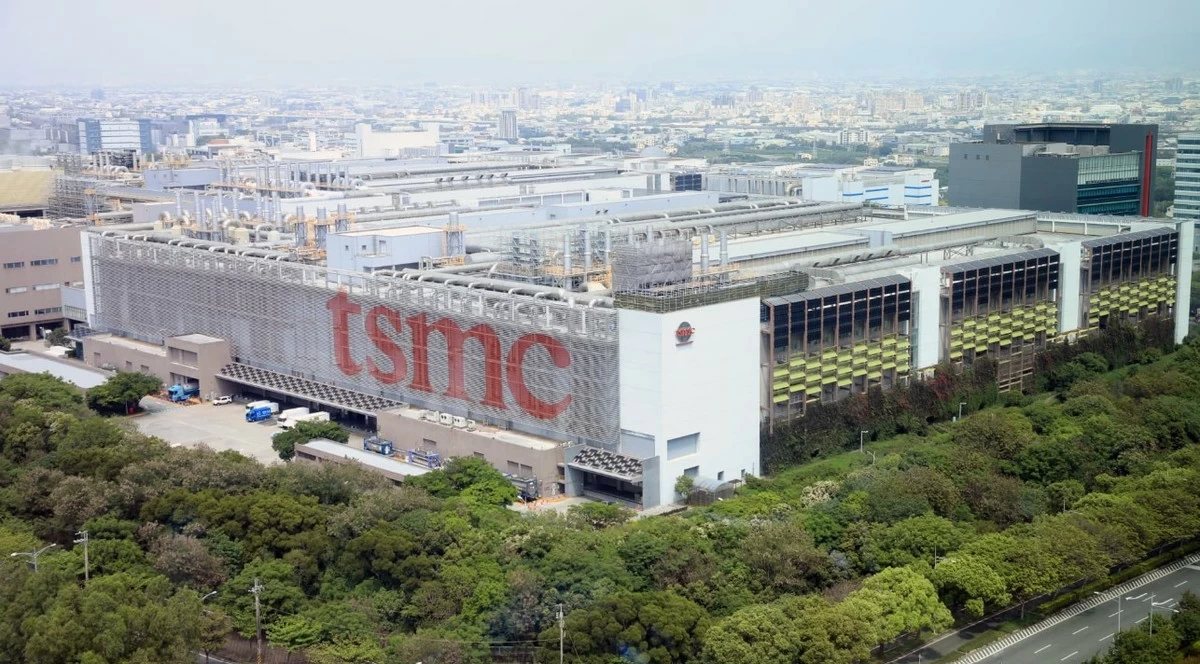
TAIPEI, Sep 8: Taiwan Semiconductor Manufacturing Co. (TSMC) is accelerating its global manufacturing expansion at an unprecedented pace as demand for artificial intelligence (AI) chips continues to outstrip available capacity, with the company building 25 chip manufacturing and advanced packaging facilities worldwide this year alone.
TSMC deputy co-chief operating officer Cliff Hou said the company’s expansion pace has increased roughly fivefold compared with previous years, underscoring the extraordinary pressure that the rapid growth of AI is placing on the global semiconductor supply chain.
Speaking at a CEO Summit fireside chat during Semicon Taiwan in Taipei, Hou said the company is constructing 25 fabs and advanced packaging facilities this year, including 13 facilities in Taiwan. He described the scale of the expansion as unprecedented.
In previous years, TSMC typically built about five or six factories annually, Hou said, adding that the rapid development of AI has fundamentally changed the semiconductor industry's demand outlook.
“As exponential scaling of AI relies on advancing computational capacity and optimizing power efficiency, customers are showing much faster demand for advanced process technologies, packaging technologies and system performance than ever before,” Hou said.
“Compared with the pattern 30 years ago, we have never seen the demand increase that much, that frequency of changes,” he added.
TSMC boosts capital spending
The surge in demand has also prompted TSMC to significantly increase its investment plans. Hou said the company has raised its capital expenditure budget twice within six months, lifting its overall spending plan by about 90 percent from the estimate made at the end of last year.
Despite the aggressive expansion, Hou said TSMC is still struggling to keep pace with the extraordinary growth in AI-related demand.
He stressed that TSMC is not alone in facing supply constraints, saying companies throughout the AI ecosystem are expanding production capacity to address shortages.
“The whole AI supply chain is doubling down on capacity expansion to solve supply issues,” Hou said.
MediaTek seeks additional capacity
The supply crunch is also affecting major chip designers.
MediaTek Chief Executive Officer Rick Tsai said during the same event that his company has requested additional semiconductor production capacity from TSMC and ASE Technology Holding Co., the world’s largest semiconductor packaging and testing company, for the period from 2027 through 2029.
MediaTek, the world’s largest smartphone chip designer, has also expanded its business into AI accelerators for cloud service providers.
Tsai said MediaTek has secured stable chip supplies from TSMC, while the company’s latest strategic cooperation with Nvidia Corp. is expected to strengthen its AI custom-chip business.
The collaboration involves Nvidia’s NVLink Fusion technology, which is designed to enable high-speed connectivity between server racks and is aimed at supporting advanced AI computing infrastructure.
Nvidia recently announced a $3.5 billion investment in MediaTek corporate bonds, a move Tsai described as a strong vote of confidence in the company.
MediaTek has maintained its target of generating $2 billion in AI custom-chip revenue in the next quarter, highlighting the growing importance of AI-related products to its business.
Taiwan shifts toward ‘made with Taiwan’
Hon Hai Precision Industry Chairman Young Liu said Taiwan’s technology industry must also adapt to the changing global supply chain landscape.
Liu argued that Taiwanese technology companies should move away from a model focused primarily on producing goods domestically and instead embrace a broader “made with Taiwan” approach.
“We all have to think about how to make with Taiwan, not in Taiwan,” Liu said.
The shift reflects growing AI demand as well as geopolitical pressures that are encouraging technology companies to diversify manufacturing and supply networks across multiple countries.
MediaTek’s Tsai said Taiwan’s key advantage is the combination of its technological capabilities, flexibility and speed, which has allowed its companies to respond to successive waves of technological innovation, from personal computers and smartphones to AI.
He said Taiwan’s semiconductor ecosystem should now be viewed as a “global Taiwan” rather than a supply chain concentrated solely on the island.
Taiwanese companies can continue expanding internationally and work with overseas partners in areas where they do not have sufficient capabilities, Tsai said.
Semiconductor substrate shortages intensify
Unimicron Technology Chairman Chien Shan-chieh said the rapid growth of AI is also intensifying shortages of semiconductor substrates while creating demand for increasingly large and complex chip designs.
The expansion of AI computing requires more sophisticated semiconductor components, placing additional pressure on the companies that supply substrates and other critical materials.
Chien also highlighted the industry's dependence on suppliers of essential manufacturing equipment and materials, many of which are small and medium-sized Japanese companies.
Those suppliers are themselves facing capacity constraints as semiconductor manufacturers worldwide race to expand production, creating additional bottlenecks across the supply chain.
The comments from executives across Taiwan’s semiconductor industry underscore the scale of the challenge created by the AI boom. While chipmakers and their suppliers are investing heavily to expand capacity, the pace of demand growth is forcing the industry to accelerate investment and rethink how semiconductor production is distributed globally.