


16/11/2026

Share:
16/11/2026
Share:
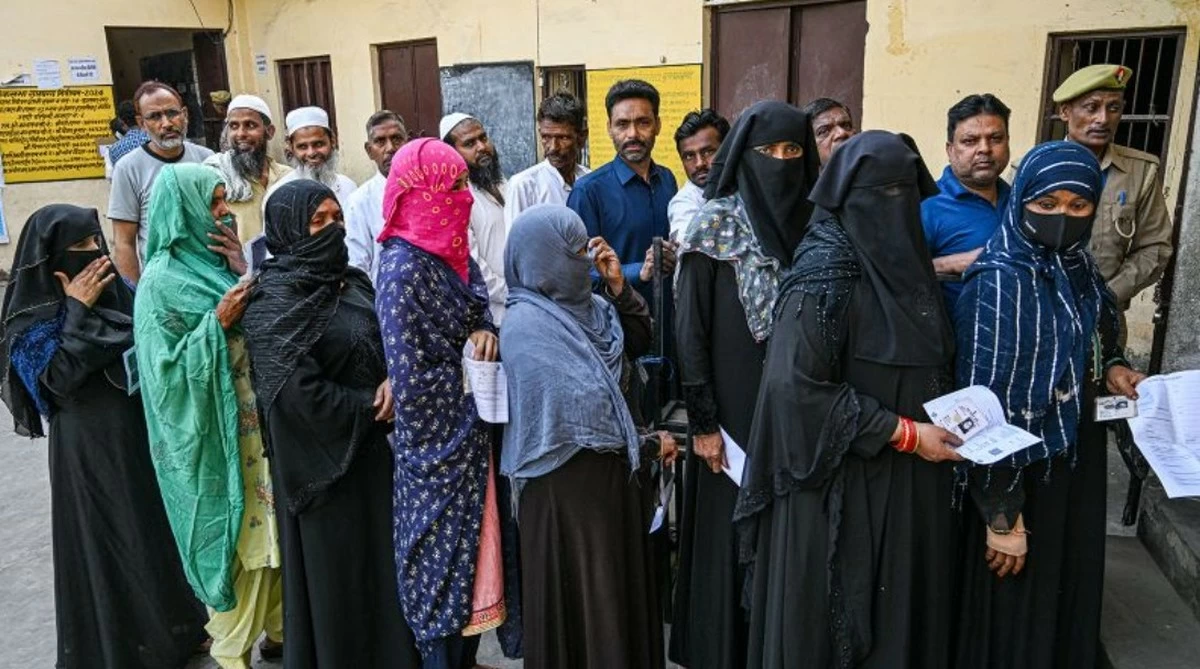

NEW DELHI, Nov 16 : A sweeping revision of India's electoral rolls has left millions of people without voter registration, with some Muslims subsequently facing detention, deportation and investigations into their citizenship, according to a Reuters investigation.
The investigation, published Monday, November 16, documents cases in which Indian Muslims were detained or questioned over their nationality after their names disappeared from revised voter lists, despite their families possessing Indian identity and historical voting records.
Among those affected is 38-year-old Sahida Fakir, who says she was detained by plainclothes officers in Mumbai on July 19 while stepping out of her home to buy vegetables.
More than three months later, Fakir remains in Bangladesh, separated from her husband and two sons.
Fakir told Reuters that officers seized her mobile phone, which contained copies of her identity documents, before taking her away and eventually sending her across the border.
Court filings identify the officers as members of the Mumbai Police Crime Branch. Police told the court that she was handed over to the Border Security Force on the Assam border and subsequently deported to Bangladesh through designated authorities.
Fakir was reportedly among 149 people deported during the operation after authorities identified them as Bangladeshi nationals.
However, she disputes the allegations, maintaining that her family has deep roots in India and that she was not allowed to present the documents stored on her seized phone.
Family records reviewed by Reuters show that her parents and grandparents appeared on Indian electoral rolls dating back to the country's first national election in 1952. Fakir herself had been registered as a voter in West Bengal since at least 2008.
Her family has challenged the deportation before India's Supreme Court, arguing that removal from an electoral roll cannot, by itself, establish that someone is a foreign national.
130 million names removed from voter rolls
India's nationwide voter-roll revision has resulted in the removal of approximately 130 million names, marking the largest deletion of voters in the country's history.
The exercise has disproportionately affected Muslims, India's largest religious minority, according to data cited by Reuters.
In West Bengal, approximately nine million names were removed ahead of the 2026 state elections.
According to the Kolkata-based Sabar Institute, Muslims accounted for around 70% of the 2.7 million names deleted following a closer review, despite representing approximately 27% of the state's population.
The Bharatiya Janata Party (BJP) subsequently won the West Bengal elections, taking control of the state for the first time.
The voter-roll revision triggered protests and allegations that the exercise could disproportionately exclude legitimate voters. The BJP has denied targeting eligible citizens.
Amit Shah links voter deletions to deportation drive
India's Home Minister Amit Shah explicitly connected the voter-roll exercise with the government's campaign against suspected illegal immigrants during a rally in Haryana on November 5.
"It is the BJP's resolve that we will detect infiltrators, remove them from the electoral rolls, and after that, we will pick them out one by one and expel them from the country," Shah said.
West Bengal has become a major focus of the campaign, particularly involving Bengali-speaking Muslims.
The issue is especially sensitive because of the region's complicated history. The 1947 partition divided Bengal between India and Pakistan, while another major wave of migration followed Bangladesh's 1971 independence war.
Millions of people crossed the borders during these periods, leaving families with relatives and ancestral connections on both sides.
Detentions despite pending appeals
Reuters also documented the case of Nasiruddin Sheikh, a utensil hawker who alleged that he and several others were detained while working in Chhattisgarh, hundreds of kilometres from their homes.
Sheikh said police detained him along with 22 others after their names disappeared from the electoral rolls.
Nineteen were released after 14 days when authorities found their names on revised voter lists. Sheikh and three others whose names did not appear remained in custody for 32 days.
"A policeman told me, 'Your name is not in the voter list. You are a Bangladeshi,'" Sheikh told Reuters.
He described the detention facility as a prison-like centre where detainees were subjected to medical examinations and biometric registration and were not allowed to leave.
Police and state lawyers have told the Calcutta High Court that West Bengal does not operate permanent detention camps.
Reuters reporters also visited a holding centre for suspected foreign migrants in Murshidabad, where they observed people inside the heavily guarded compound, clothes hanging within the premises and an ambulance and covered police bus.
Millions challenge voter deletions
The voter-roll revision has triggered extensive legal challenges, with affected individuals questioning the procedures used to remove their names and establish their citizenship status.
Human rights activist Kirity Roy said millions of cases were awaiting decisions, raising concerns about delays in the appeals process.
"There are millions of cases against the deletion of names from the voter list and people are waiting for justice," Roy said.
"The tribunals are slow. We are hopeless with what is going on."
India's Home Ministry, Prime Minister's Office and Election Commission did not respond to Reuters' requests for comment on the investigation.
The cases have intensified scrutiny of the relationship between India's voter-registration process and its campaign to identify suspected undocumented immigrants, particularly in border states where citizenship, migration and historical family records remain contentious issues.