


16/10/2026

Share:
16/10/2026
Share:

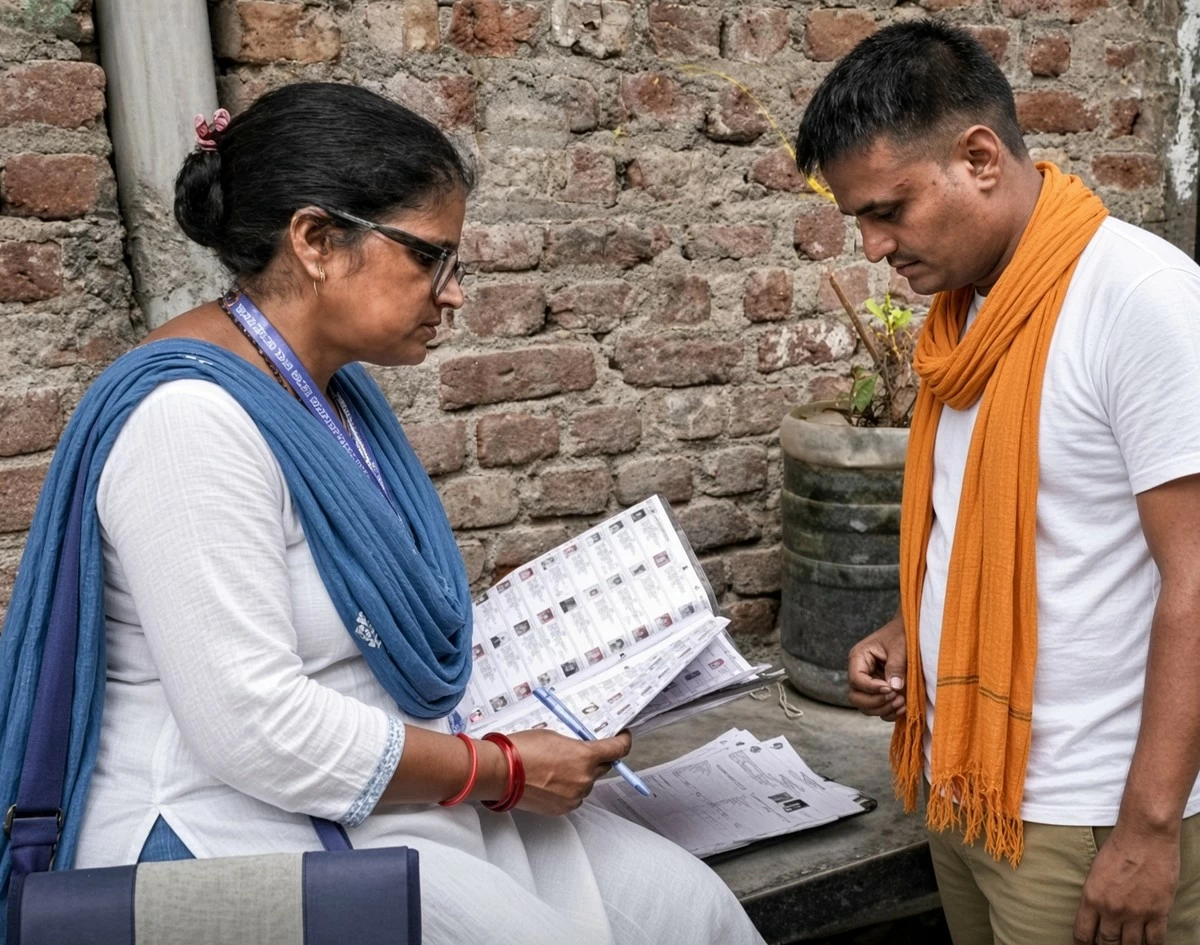
NEW DELHI, Oct 16: “Pehle vote gaya, phir jhuggi gayi” (First my vote disappeared, then my shanty was demolished), lamented Maya Devi, 58, a domestic worker from Mayur Vihar Phase-I, whose name and those of her two daughters are missing from the electoral rolls, while her husband and son remain listed.
Adding to her distress, her shanty has been demolished, forcing the family of five to squeeze into a tiny kitchen-cum-room near Pillar 1 of the Mayur Vihar metro station.
“I called up the Booth Level Officer (BLO) to help me fill out the form so that I could get my name back on the list. But he never came,” she said. Maya Devi said she had lived in Delhi since she was 13 and had voted in every election, including the 2025 Assembly polls.
She was among several people who testified on Thursday before an independent commission examining grievances over the Special Intensive Revision (SIR) of electoral rolls. The witnesses included a former Lok Sabha MP, a teacher who said he had submitted more than 500 enumeration forms from a slum that has since been demolished, and a man described as a “walking dead”.
Witnesses from West Bengal, Delhi, Telangana, Bihar and Rajasthan took an oath in the name of God and told the commission that their names had been deleted despite their submission of relevant documents.
The commission was presided over by former judges Justices A K Patnaik, Rekha Sharma and Anjana Prakash.
Representatives of Voter Adhikar Manch and Jan Sarokar highlighted the scale of voter deletions in Delhi, raising concerns over the impact on citizens whose names had disappeared from the rolls.
According to figures presented at the hearing, Delhi's January 2025 electoral rolls contained more than 1.5 crore voters. Around 11 lakh names were subsequently removed through monthly deletions before the SIR freeze, mostly between January and June 2026.
The draft rolls published on August 31 excluded a further 47 lakh-plus voters, according to the figures presented.
Former MP questions deletion of his nameFormer West Bengal MP Tarun Mondal said his name had been removed from the electoral rolls despite his family completing the enrolment process.
He said he had written to several authorities, including the Prime Minister and the President, seeking redress. According to Mondal, only the President responded.
“How could I have been an MP if I was not a voter of India? Does that mean I am a Bangladeshi?” he asked.
His testimony highlighted the concerns of people who say their previous participation in elections and submission of documents did not prevent their names from being deleted.
Teacher says family faces encroachment allegationsKamal, a teacher from Bela Estate, said he had been voting since 2002 and that his name had appeared on the electoral rolls as recently as last year.
“I was born here in 1986. My grandfather came here in 1913, and my father is around 70. Now, we are being told we are encroachers, though we submitted more than 500 enrolment forms,” he said.
His account highlighted the difficulties faced by residents of demolished settlements who are seeking to establish their eligibility and retain their voting rights.
‘Logical discrepancies’ raise concernsThe hearing also examined the use of “logical discrepancies” to question voters' eligibility. These included inconsistencies involving the number of siblings and small age gaps between parents and children.
Findings presented by Voter Adhikar Manch indicated that Muslim voters were more frequently flagged for such discrepancies at the notice stage in Delhi and Karnataka.
Sabir Ahmed, who conducted a citizens' audit in West Bengal, questioned the use of artificial intelligence to identify such anomalies, arguing that automated checks did not adequately account for social realities, including early marriages and motherhood at a young age.
The concerns raised at the hearing centred on whether data-based screening methods could incorrectly flag legitimate voters and whether affected individuals had sufficient opportunities to establish their eligibility.
Commission calls for public scrutiny of electoral rollsThe independent commission called for collective public scrutiny of electoral rolls, arguing that individual verification and the filing of claims and objections alone might not be sufficient to identify errors involving wrongful inclusion, exclusion, duplication or incorrect classification.
It proposed that draft electoral rolls be read aloud at public meetings, allowing residents to check entries, identify missing names and flag discrepancies before the rolls are finalised.
The recommendation seeks to supplement individual verification with community-level scrutiny, particularly in areas where residents face difficulties accessing documents or navigating the enrolment process.
The testimonies underscored the personal consequences of electoral roll revisions for people who say they have previously voted but now face uncertainty over their registration. The commission's proposed approach would give communities a further opportunity to identify and report errors before the finalisation of the rolls.
Source: TOI