


17/09/2026

Share:
17/09/2026
Share:

H.E. Troy F. Torrington discusses Guyana-Kuwait ties, investment, food security, tourism, trade and the importance of peace and international law with Arab Times
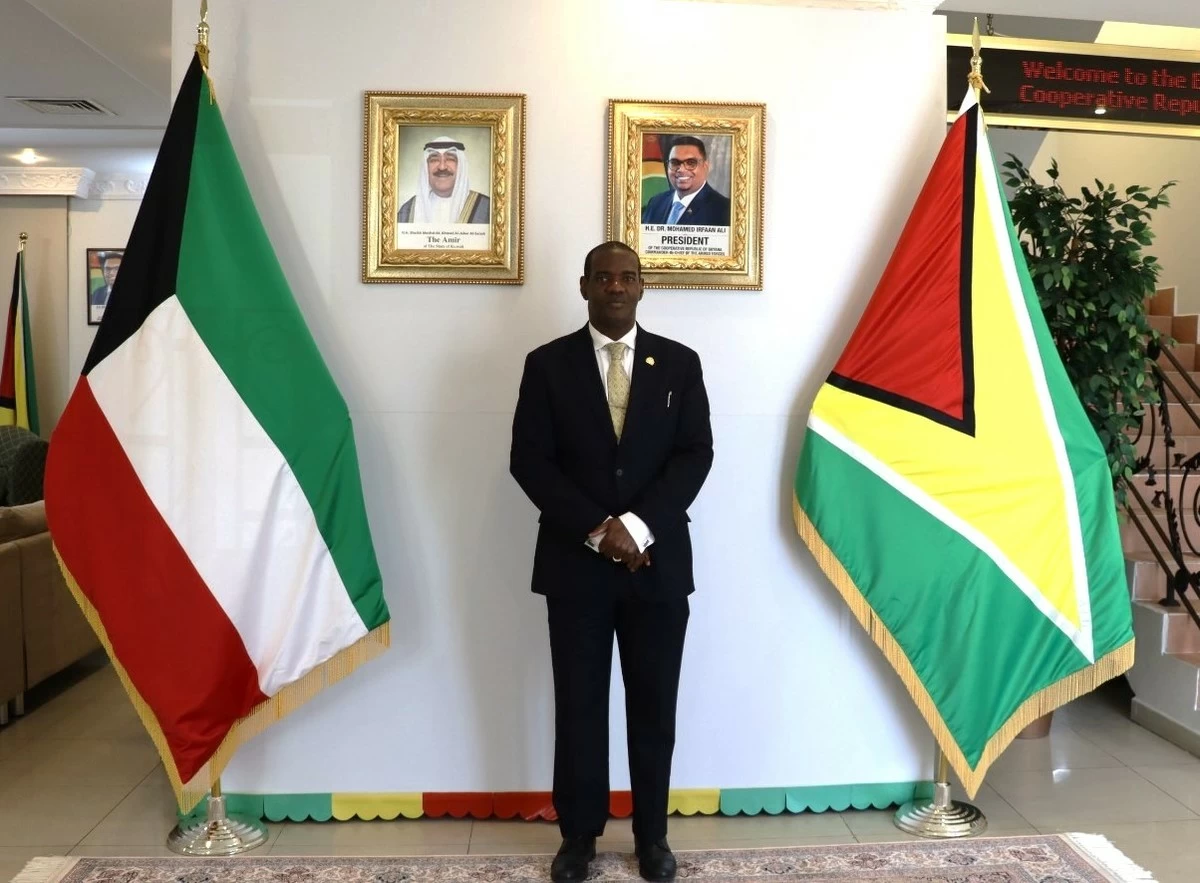
KUWAIT CITY, Sept 17: Nearly two years into his diplomatic assignment in Kuwait, the HE. Troy F. Torrington, the Ambassador of Guyana to Kuwait says his experience in the country has been marked by warm hospitality, strong cooperation and close relations with Kuwaiti authorities and the diplomatic community.
Reflecting on his time in Kuwait, the ambassador said the experience has been “really wonderful,” noting that the pace of life is different from the multilateral diplomatic environment in which he spent much of his career at the United Nations.
He expressed his appreciation to the government and people of Kuwait for the hospitality extended to him and his wife, saying they have enjoyed close cooperation with Kuwaiti authorities, colleagues and fellow diplomats.
The ambassador also highlighted the friendly atmosphere within Kuwait’s diplomatic community, saying relations extend beyond official engagements to social activities, including playing soccer together.
In this interview with Arab Times, HE. Troy F. Torrington discusses Guyana-Kuwait relations, opportunities for greater economic and trade cooperation, Guyana’s rapidly developing oil sector, tourism and efforts to strengthen ties between Guyana and Kuwait and the wider Gulf region.
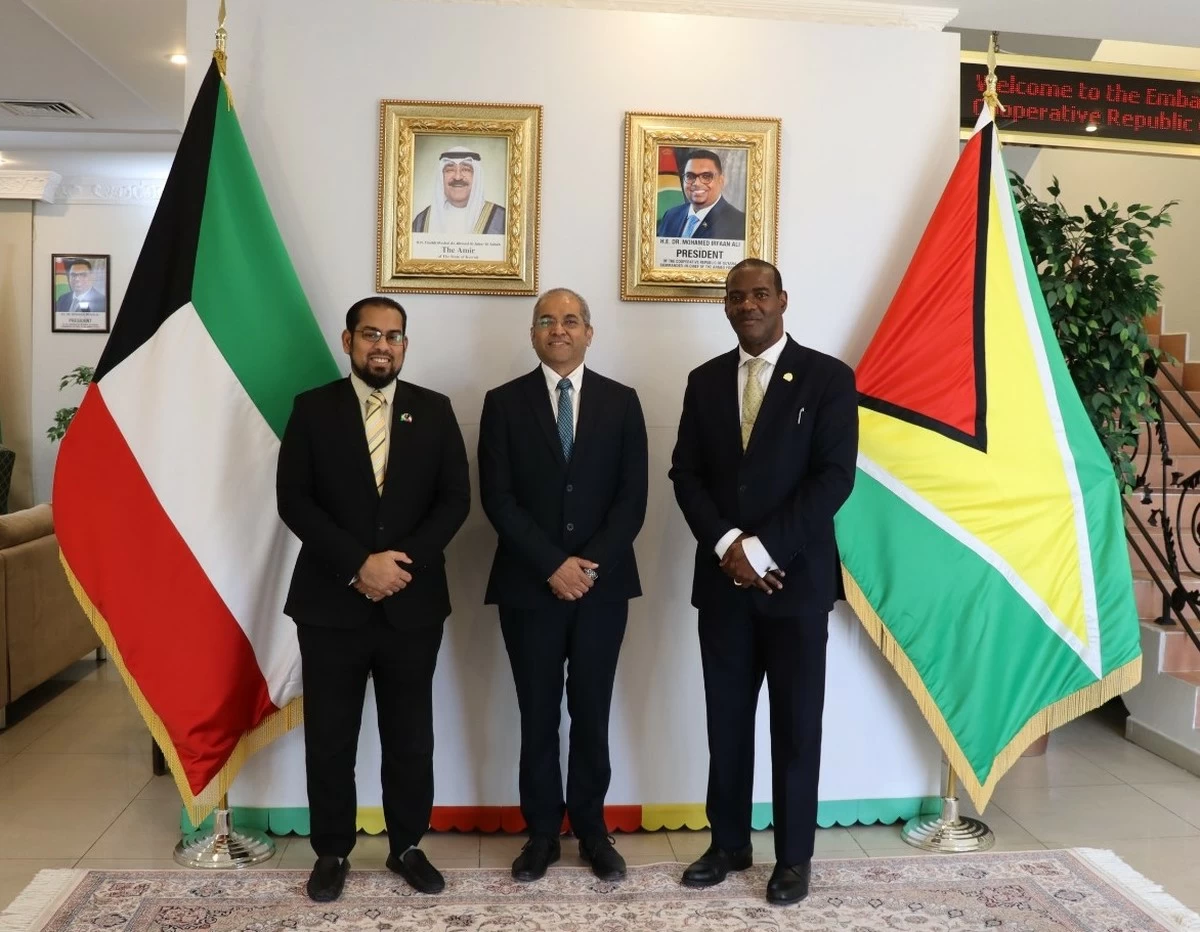
Arab Times: Guyana and Kuwait have maintained friendly relations for many years. How would you describe the current state of bilateral relations, and what are the key areas where you believe cooperation between the two countries can be further strengthened?
HE. Troy F. Torrington: The Government and people of Guyana have considerable gratitude to Kuwait for its long-standing friendship. This year, we celebrated the 30th anniversary of the establishment of diplomatic relations, and I would characterize the relationship today as extremely strong and very promising.
In a word, our relationship is mature, with very good possibilities for strengthening it further in several areas. One of the most important is the economic and trade relationship.
Since the establishment of diplomatic relations, both Guyana and Kuwait have undergone tremendous transformation. For Guyana in particular, the past five to seven years have been transformative, as the country has emerged as a significant oil and gas producer. This has changed our economic outlook, our fortunes and, consequently, the nature of our relationship with Kuwait.
We have looked closely at Kuwait’s own development trajectory as an oil and gas producer and at some of the significant and positive changes that this has enabled for the people of Kuwait. There are important lessons and opportunities for collaboration, and I believe the possibilities for economic cooperation between Guyana and Kuwait are immense.
At the same time, we have to be pragmatic. Geographic distance can sometimes make certain initiatives challenging, although it should not be an excuse. We therefore need to look critically at the areas that can deliver the greatest value to both countries. Rather than pursuing a very broad range of projects, I believe we should focus on two or three strategic undertakings that can help move the relationship from having a strong framework, with many agreements already in place, to achieving tangible results.
Beyond the economic sphere, political cooperation is also very important. Guyana and Kuwait already collaborate in various international forums, particularly within the United Nations. This is significant because both are small states, and we have an important role to play in shaping the global normative framework and defending the rules by which the international community operates.
Given the realities around us, it is increasingly important that there are rules that are respected by all and that countries demonstrate solidarity with one another. This has been a feature of Kuwait’s diplomacy, particularly its role as a strong humanitarian champion in many areas. Guyana shares that commitment.
Beyond the economic sphere, political collaboration is also important. Guyana and Kuwait already cooperate in various international forums, particularly at the United Nations.
As two small states, we share an interest in a rules-based international system and in demonstrating solidarity on issues of peace, security and development. Kuwait has also been a strong humanitarian champion, a commitment that Guyana shares.
So, beyond the dollars and cents, we should also look at how we can leverage our relationship internationally and amplify our voices on issues of common concern.
As we say in Guyana, “Very often, a friend nearby or a friend close at hand is better than a brother that is far away.”
Arab Times: What opportunities does Guyana see for expanding trade and investment with Kuwait and other Gulf countries? Are there particular sectors where you would like to see greater participation by Kuwaiti investors?
HE. Troy F. Torrington: I believe Guyana can be a reliable partner in the Gulf’s food security and economic diversification agenda. With the transformation Guyana has undergone, particularly following the emergence of the oil and gas sector, the stage has been set for meaningful collaboration, especially in food security.
Agriculture has traditionally been one of Guyana’s primary income-generating sectors. The development of oil and gas has helped ease some of the energy constraints that previously affected manufacturing and industry, opening new opportunities for agricultural processing and value-added production.
I believe this is one area where Guyana, Kuwait and the Gulf region as a whole can develop much closer relations.
Another area is finance. Guyana’s financial market is still developing, and this presents opportunities for greater collaboration, particularly as geographic distance is less of a constraint in financial services.
Tourism is another promising area. Historically, there has not been significant tourism exchange between Guyana and the Gulf, but I believe conditions are now more favorable for developing stronger links in this sector.
Arab Times: Kuwait’s new investment rule set to be implemented in Feb 2027, may create both opportunities and challenges for private traders. Do you expect the changes to make Kuwait more attractive to foreign investors, or could increase regulations discourage smaller businesses?
HE. Troy F. Torrington: I would make two points. First, good regulation protects the market. Second, good implementation makes compliance achievable. These two considerations have to be balanced.
In any country, appropriate legislation is necessary to create a proper platform for investment. My understanding is that Kuwait’s anti-commercial concealment law is expected to take effect early next year, and this should help promote greater transparency. Enhancing investor confidence through transparency is certainly welcome.
At the same time, entities need to have the capacity to comply. Procedures should be clear and as simple as possible. From my experience so far, I have confidence that this is being addressed. I have had some interaction with Kuwait’s investment promotion agency, and I find it very advanced, almost a model for others. The ability to clearly understand the regulations, what is required and what opportunities are available is extremely helpful to investors.
Ultimately, Kuwait’s regulations are for Kuwait to determine, but at this stage, I do not see them as a significant threat to attracting investment. From my own comparison with Guyana’s framework, I would describe the approach as fairly balanced and attractive.
Guyana has also introduced safeguards as our economy has attracted increasing investor interest. We have what we call local content legislation, which is intended to protect the interests of Guyanese citizens. Investment remains open, investors can repatriate funds and own property, but certain areas require participation by local businesses or citizens.
The underlying consideration is similar: governments need to ensure that their citizens benefit from economic development and do not become second-class citizens in their own country. So, while I would not claim to be an expert on Kuwait’s legislation, I can certainly see the importance of transparency and the confidence it can provide investors. The key is finding the right balance between regulation, investor confidence and protection of the local population.
Arab Times: With oil production expanding rapidly, how is Guyana ensuring that its economy does not become overly dependent on petroleum? Which non-oil sectors do you see as having the greatest potential for future growth?
HE. Troy F. Torrington: Thank you. This is a very important question and one that is very close to our hearts in terms of Guyana’s overall development planning. It is an issue that has received considerable attention from the leadership of Guyana. President Mohamed Irfaan Ali was also asked about this recently in an interview with Al Jazeera.
From the outset, we have been very deliberate in ensuring that Guyana does not become overly dependent on its natural resources or fall victim to what is commonly described as the “Dutch disease.” For Guyana, this has not been particularly difficult because, although oil and gas now have a major impact on the economy, agriculture remains the predominant sector in terms of livelihoods.
Agriculture has historically been fundamental to Guyana. We continue to produce significant quantities of sugar, rice, fresh vegetables, fruits and a range of non-traditional crops and products. Guyana is often described as a major agricultural basket of the Caribbean because of the availability of arable land. Even the name Guyana means “land of many waters.” As a tropical country, agriculture has enormous potential.
Previously, agriculture faced two major constraints: access to affordable energy and, related to that, transportation and storage. Freezing and storage facilities, for example, were expensive because they required significant amounts of energy. Those constraints have now been considerably reduced. We therefore believe Guyana can become a reliable producer of agricultural products and use agriculture as one of the main pillars for ensuring that we are not overly dependent on oil and that we have a sustainable economic model.
Another important element is how we manage our oil revenues. Most of our oil and gas resources are being channeled into our version of a sovereign wealth fund, the Natural Resource Fund. The government must go to Parliament to make withdrawals from the fund. At the same time, we are deliberately investing in other sectors, particularly agriculture, infrastructure, human capacity, education and health.
Tourism is another area with significant potential. Our financial sector is also still developing. We have a relatively young stock exchange, and we believe financial services can become an important area of growth.
The expansion of the oil and gas sector is also creating opportunities in other areas that normally accompany such growth, particularly construction and real estate. Construction is now one of the largest areas of economic activity after agriculture. There has been a significant increase in demand for housing, driven in part by the influx of expatriates and the need for new housing stock.
We are seeing high-end developments, gated communities, hotels and apartments, while at the same time there is substantial unmet demand for improved housing among low- and middle-income households. So construction, real estate, housing, agriculture and infrastructure development all have considerable potential over the next 20 to 30 years.
One of the major projects we are undertaking is the Gas-to-Energy project, which will bring natural gas onshore and support industrial development. Guyana produces significant quantities of bauxite and gold, while sugar remains an important sector, but historically we have not had sufficient capacity for secondary processing and manufacturing. With greater access to energy, we can move toward more value-added production and light manufacturing.
We are also closely monitoring the growth of the non-oil economy. Non-oil sectors are projected to grow by about 11 percent this year, which is significant in itself. This allows us to save more of our oil revenues while continuing to invest in national development.
We are not yet at the level of Norway in terms of savings, but we believe we also have to invest quickly because we want Guyana to remain on a low-carbon development trajectory. We are strong advocates of climate action and want to ensure that our infrastructure and economy transition toward a lower-carbon future.
Oil is a blessing for Guyana, but we do not see it as our future. Our objective is to build sustainable and viable industries outside the oil sector. So far, I believe we have been on a good path because, from the outset, we have had a clear strategy not to focus exclusively on oil.
Arab Times: Guyana remains relatively unknown to many Gulf travelers. What are the biggest obstacles preventing Guyana from becoming a major tourism destination, and what can Kuwait and Guyana do to change that?
HE. Troy F. Torrington: Guyana should be known as a premium, sustainable nature destination rather than simply another mass-market tourism stops. I take your implied criticism that Guyana is perhaps not as well-known as it should be. We accept some responsibility for that, but we are working to change it.
In fact, Guyana is one of the best-kept secrets in tourism. For several years, it has been ranked among the leading ecotourism destinations. We have a largely unspoiled environment, with about 85 percent of the country covered by pristine forest. Historically, we have not focused on tourism as a major industry because our tourism model is different from the traditional sun, sand and sea model. Our product is ecotourism — being in harmony with nature and interacting with it. We also believe our people are among our greatest assets because of their hospitality.
Tourism has grown significantly over the past four or five years, with visitor numbers increasing year after year. With the internet and digital platforms, we have fewer excuses today for not promoting Guyana more effectively. We have been reaching out to tourism agencies and other partners to strengthen our image and bring more information about Guyana to international travelers.
There is also growing interest from the Gulf. Qatar has been engaging with Guyana on a major tourism resort project that could include hundreds of rooms. We also have growing cooperation with the UAE, including Dubai and Abu Dhabi, as well as some engagement with Saudi Arabia. Kuwait was also among the countries that showed interest early on, but the number of visitors from Kuwait remains very low — fewer than 20 a year at present. So, there is considerable potential, and we need to develop tourism packages and initiatives specifically aimed at the Kuwaiti and wider Gulf markets.
One of Guyana’s greatest strengths is its diversity. People of different ethnicities and faiths live together in harmony. We have large Indo-Guyanese and Afro-Guyanese communities, as well as significant indigenous populations. Indigenous communities have special status and protected reserves, and permission is required to enter some of these areas. They have preserved their traditional way of life and are regarded as custodians of our forests and some of our greatest natural treasures.
One of those treasures is Kaieteur Falls, one of Guyana’s most famous attractions and the world’s highest single-drop waterfall. I believe the Kaieteur experience is something every Gulf traveler should have.
Our cultural diversity is equally important. Guyana has significant Christian, Muslim and Hindu communities, and it is common to see a mosque, temple and church in the same area. We celebrate festivals including Eid, Ramadan, Holi, Diwali and Christmas. Guyana is also unique as the only English-speaking country in South America.
Although we are geographically in South America, we share many cultural and historical links with the Caribbean. Guyana is a mainland country with considerable land resources, and the rest of the English-speaking Caribbean could fit within Guyana in terms of land area. This creates an opportunity to develop combined tourism packages linking Guyana with established Caribbean destinations such as Jamaica, Barbados and Trinidad and Tobago.
The Guyana component would bring a different dimension, particularly ecotourism and nature-based experiences. Our tourism infrastructure is developing, but we do not want to over-commercialize the sector. We want Guyana to remain unique. It is not intended to be another Tahiti or Barbados; it offers a different experience.
There are also growing links between Guyana and countries such as India, Bangladesh, Sri Lanka and increasingly Egypt. These connections, along with the cultural affinities between Guyana, the Gulf and parts of the Caribbean, could make travel between the regions more feasible and interesting.
Egypt, in particular, has emerged as a significant market. The volume of applications has grown so substantially that we are still developing the capacity to process them. Travel agents are also playing an important role in facilitating travel, and there may be lessons from the Egyptian market that can be applied to the Gulf.
At present, some travelers use routes through the Gulf or Egypt and Turkey, Istanbul, before continuing through Panama to Guyana. President Ali’s recent official visit to Qatar also included discussions on establishing more direct connectivity with Guyana. Once such arrangements come to fruition, they could provide easier travel options and hopefully encourage greater visitor numbers from the Gulf.
Ultimately, I believe the opportunity is there. Guyana can offer Gulf travelers something different: pristine nature, ecotourism, cultural diversity, warm hospitality and a genuine connection with the environment. Our objective is to build the tourism sector while preserving what makes Guyana unique.
Arab Times: As a growing oil producer, does Guyana see the Middle East conflict and disruptions to major energy routes as an opportunity to strengthen its position in global energy markets, or does it fear the wider economic consequences?
HE. Troy F. Torrington: This is a very important question. For us, energy security is strengthened by reliable supply, while lasting security comes from peace and stable trade routes. So I cannot overemphasize that we do not view the current conflict or disruptions to energy routes as an opportunity for Guyana.
We are very much committed to peace. We have expressed our solidarity on several occasions with the government and people of Kuwait, and it is our hope that the conflict will be resolved as soon as possible so that regular trade routes and normal commercial activity can resume.
We do not see ourselves as being in competition with the Gulf oil producers. Guyana occupies a different position in the global energy market and, in many respects, our production can be complementary to what is produced in the Gulf.
Guyana is still a relatively small producer at the global level, although our growth has been extremely rapid. Seven or eight years ago, we were producing no oil at all. Today, production is around 1.2 million barrels per day and is continuing to expand. Much of our crude is light oil, with significant volumes going to markets such as India and the United States.
It is true that we have seen increased revenues because of the current situation in global energy markets, but we regard that as a temporary bonus rather than something on which our economic future should depend. Our economic planning is based on sustainable oil prices rather than exceptionally high prices.
At the same time, Guyana is affected by higher global oil prices because, despite being a major new oil producer, we still import petroleum products. The entire Caribbean is affected, and higher energy prices contribute significantly to inflation. In fact, for Guyana, the global price of oil is one of the biggest contributors to inflation.
We have therefore had to take measures to cushion the impact on the population, including cash grants. It is not something governments necessarily want to rely on because such measures can create dependency, but where inflation has eroded people's livelihoods, the government has a responsibility to provide support. Fortunately, Guyana has had the fiscal space to do so. Many other Caribbean countries have not had the same capacity and have had to take on significant debt.
Our broader position is based on principles. We strongly believe in territorial integrity and sovereignty, non-intervention in the affairs of states and the peaceful settlement of disputes. These are not simply abstract principles for Guyana; they come from our own history.
Venezuela: Diplomacy, Not Conflict
We have a long-standing territorial controversy with Venezuela. Guyana's position has consistently been that disputes should be resolved through diplomacy and international law. Ultimately, we were compelled to take the matter to the International Court of Justice because we believe agreements must be honored and that the international order depends on states respecting their commitments.
Our experience has reinforced our belief that international law and multilateral institutions are particularly important for small states. When there is an asymmetry of power, smaller countries cannot always rely solely on bilateral negotiations. Rules and institutions provide an important framework for protecting the rights and interests of all states.
Interestingly, despite the territorial dispute, Guyana has welcomed significant numbers of Venezuelan migrants. Our differences are not with the people of Venezuela. We have also had periods of very good relations with Venezuela. During the period of Hugo Chavez, for example, the Petrocaribe initiative allowed Venezuela to provide subsidized oil to Caribbean countries, while Guyana supplied rice. It was an example of how neighbors could cooperate for mutual benefit.
The Venezuelan situation also provides an important lesson for Guyana: simply possessing natural resources does not automatically translate into tangible benefits for the population. That is why we are focused on ensuring that our people benefit from our oil resources through infrastructure, improved living standards, local participation and savings for future generations.
This also connects with our climate policy. People sometimes ask how Guyana can be a major oil producer while also describing itself as a climate champion. Our position is that these objectives are not contradictory. Guyana has one of the world's most heavily forested territories, with about 85 percent of the country covered by forest, much of it within the Amazon rainforest.
We have therefore played a significant role in developing mechanisms to protect forests and reduce emissions from deforestation and forest degradation. Our partnership with Norway helped demonstrate how countries can be incentivized to preserve standing forests, and this experience contributed to the development of the broader REDD+ framework and the growth of carbon-credit markets.
Climate change is also a very practical issue for Guyana. Georgetown, our capital, is below sea level, and much of our population lives along the coast. The country depends on sea defenses and drainage systems to protect communities from the Atlantic Ocean. Rising sea levels have increased the pressure on those systems.
For us, therefore, climate change is not an abstract issue. It is an existential concern. We believe Guyana can contribute to the global climate effort while using its natural resources responsibly to improve the lives of its people.
And this brings me back to the importance of diplomacy. As a small country, we do not seek to compete through military strength. We invest in diplomacy and in international law. Principles such as territorial integrity, sovereignty and freedom of the seas matter greatly to small states.
Guyana and Kuwait have worked closely at the United Nations, including on issues concerning international peace and security. During Guyana's term as a non-permanent member of the UN Security Council, we worked closely with Kuwait on issues of importance to Kuwait, including the arrangements surrounding the conclusion of the UN mission in Iraq and the continuing issues relating to missing persons and Kuwait's national archives.
Our cooperation also extends to UN reform and Security Council reform. These are examples of how small states can have an influence beyond their size when they work together and defend principles that are important to the international community.
Ultimately, Guyana's position is clear: we do not want conflict or disruption of energy routes to continue. We want stable trade, reliable energy supplies and peaceful relations among states. Any temporary increase in oil revenues is not a substitute for that stability.
Oil is a blessing for Guyana, but it is not what we see as our future. Our future is a diversified, sustainable economy in which oil revenues are used to build other sectors, improve the lives of our people and preserve opportunities for future generations.
By John C Fernandes
Online Media Manager – Arab Times