



09/07/2026

Share:
09/07/2026
Share:
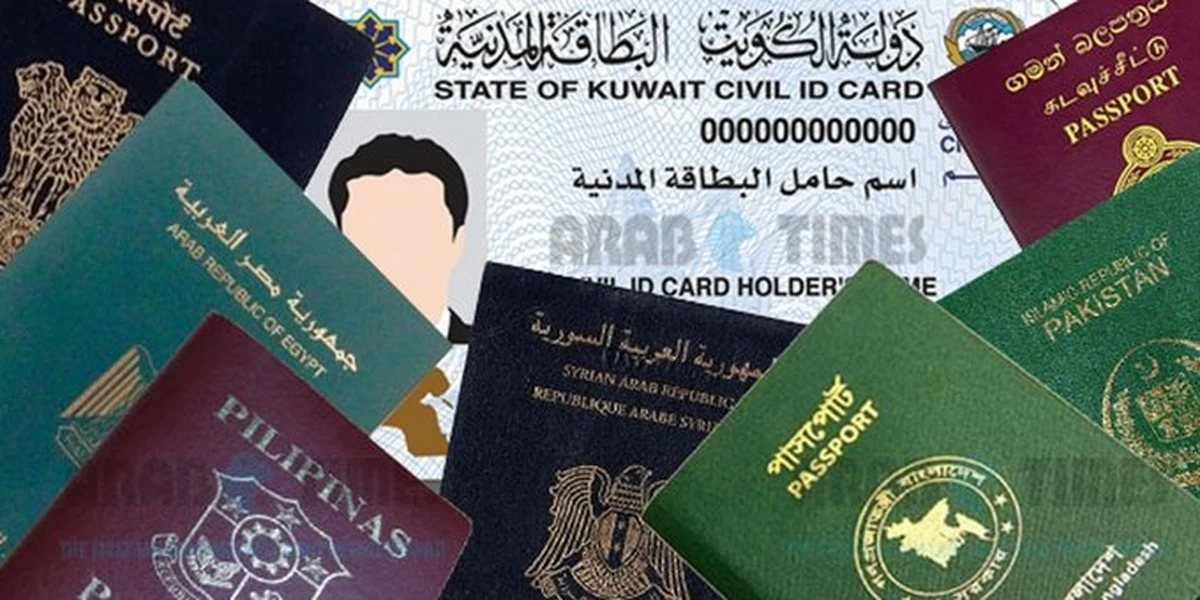

KUWAIT CITY, July 9: Kuwait recorded 11,700 new residency violations during 2025, up by 1,000 cases from the previous year, even as the overall number of residency violators continued to decline, according to immigration statistics released by the Central Statistical Bureau (CSB).
The data showed that while new violations increased from 10,700 in 2024 to 11,700 in 2025, the cumulative number of residency violators fell for another consecutive year to 80,800, down from 81,500 in 2024. The figures indicate that authorities continued efforts to resolve the status of existing violators while simultaneously detecting new residency offenses.
At the same time, Kuwait's resident population continued to expand, driven largely by growth in private-sector work permits. The total number of valid residency permits reached approximately 3.166 million by the end of 2025, an increase of 142,000 permits compared with 2024, representing an annual growth rate of 4.7 percent.
The statistics also showed a decline in cancelled residency permits. A total of 47,200 permits were cancelled during 2025, compared with 49,700 in 2024, marking a decrease of 2,500 permits, or about 5 percent. The downward trend follows a larger total of 57,100 cancellations recorded in 2023.
Residency permits continue steady growth
The number of valid residency permits has increased steadily over the past four years, rising from 2.839 million in 2022 to 3.166 million in 2025, an overall increase of 327,200 permits.
Private-sector work permits under Article 18 remained the largest residency category, totaling 1.66 million permits, accounting for 52.6 percent of all valid residency permits.
Domestic worker permits under Article 20 ranked second with 773,300 permits, representing 24.4 percent of the total, followed by Article 22 family reunification permits with 566,600 permits, accounting for 17.9 percent.
Government employee residency permits under Article 17 increased to 101,600, compared with 96,900 a year earlier. Residency permits issued under Article 19 for freelance activities rose to 1,800, while residency permits based on financial means reached 2,100.
Asian nationals remain largest resident group
The statistics showed that non-Arab Asian nationals continued to make up the largest share of Kuwait's expatriate population. Their residency permits increased from 1.81 million in 2022 to around 2.03 million in 2025.
Residents from non-Arab African countries recorded the fastest growth during the same period, with their numbers rising from 31,900 to 68,500.
Among residency categories, Article 22 family reunification permits increased from 544,400 in 2024 to 566,600 in 2025, while domestic worker permits under Article 20 rose from 735,700 to 773,300, with non-Arab Asian workers accounting for most of the increase.
Private-sector permits dominate cancellations
Despite the overall decline in cancelled residency permits, Article 18 private-sector work permits accounted for the largest share, with 23,400 cancellations, representing 49.5 percent of all cancelled permits.
Non-Arab Asian workers accounted for 16,600 of these cancellations, followed by 5,000 Arab workers and 910 non-Arab African workers.
Cancelled Article 22 family reunification permits fell significantly to 12,200, down from 15,900 in 2024. Women accounted for 7,700 of these cancellations, compared with 4,500 involving men.
Private-sector workers account for most new violations
The majority of new residency violations recorded during 2025 involved Article 18 private-sector workers, with 4,300 violations, representing 36.1 percent of the total.
Temporary residency holders under Article 14 accounted for 4,100 violations, or 34.4 percent.
Violations involving domestic workers under Article 20 declined to 2,400, while family reunification violations under Article 22 fell to 1,000. Violations under other residency categories remained comparatively low.
By nationality, non-Arab Asian residents accounted for the largest share of new residency violations, recording 7,300 cases, or 61.6 percent of the total. Arab nationals accounted for 3,800 violations, while non-Arab African nationals recorded 695 cases.
The latest figures suggest Kuwait continues to tighten enforcement of residency regulations while maintaining steady growth in the expatriate population, particularly in the private sector and domestic workforce.