



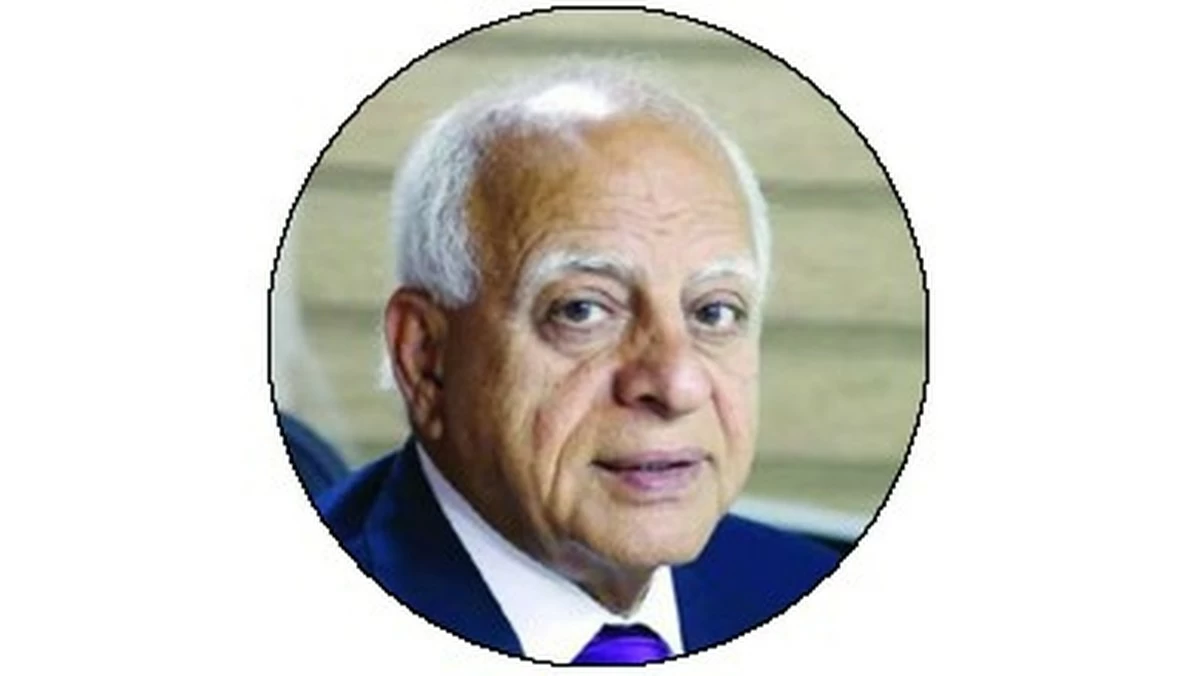
I have worked in the contracting sector for 50 years, and I am well aware of its problems, the poor reputation of many of its practices, and the entities responsible for that reputation. A contracting agreement is an arrangement between the government and another party to execute a consulting, architectural, or materials supply project for various government entities.
The government includes stringent clauses in all contracting agreements. If the contractor were to carefully consider them, the contract would never be signed. Some of these clauses stipulate the supplier's obligation to deliver under all circumstances, even in cases of 'force majeure.' This occurred during the COVID-19 pandemic and most recently with the closure of the Strait of Hormuz, despite the impossibility of continuing supply without the supplier facing bankruptcy.
The construction contracting sector suffers from chronic problems, the most serious of which is the delay in payments to contractors, even though the contract budget is allocated and available to the ministry. Historically, government agencies have been slow to disburse payments to contractors due to lengthy bureaucratic procedures and cumbersome payment processes, forcing contractors to repeatedly visit the ministry to request their dues. Other methods have recently become more difficult than before, or may involve compromising the quality of the product or service. As a result, the contractor is often accused of theft. If the contractor is indeed a thief, then the responsibility lies with whoever forced him into that situation.
The entities most prone to payment delays, due to inefficiency and bureaucracy, are the Ministry of Health, the Ministry of Public Works, and the Ministry of Electricity, Water, and Renewable Energy. In contrast, entities affiliated with the Kuwait Petroleum Corporation are among the most committed and prompt in settling payments. This indicates that the issue is not government policy itself, but rather the failure of one entity and the efficiency of another. Perhaps officials in various ministries are unaware of the consequences of delaying payments to contractors. These payments are as vital as blood to the body. Delayed payments cause significant financial and psychological strain on contractors, sometimes pushing them to take extreme measures to obtain what is rightfully theirs.
One of the causes of obstruction is assigning weak employees or officials to decision-making positions, which leads them to delay action in order to avoid mistakes. Those who do nothing never make mistakes. Fear of consequences has become a barrier to administrative and technical expertise, particularly in the Ministry of Services, which requires practical and technical skills that keep pace with developments in technology, information systems, and modern management. The absence of competent management has led to numerous problems and significant financial losses for the state. It has caused financial hardship for many contractors, who are unable to pay for equipment, labor, and suppliers. As a result, the smooth execution of projects has been negatively affected, leading to delays in delivery, financial disputes between contractors and the contracting ministry, and contractors becoming entangled with banks financing their projects. All of this impacts the economy through disruptions in cash flow in the local market and delays in project implementation and completion. In turn, society is affected due to delays in the delivery of schools, hospitals, and vital road infrastructure.
The development process cannot accelerate while contractors' outstanding payments remain frozen in the Central Bank, without the relevant government agencies addressing the resulting damage and the importance of expediting payments. We appeal to the ministers most directly responsible for payment delays, including the Minister of Public Works Noura Al-Mashaan, the Minister of Electricity, Water and Renewable Energy Subaih Al-Mukhaizeem, and the Minister of Health Dr. Abdulwahab Al-Awadhi to resolve this issue. I also urge the Cabinet to encourage other government entities to streamline their payment procedures and follow the example of the Kuwait Petroleum Corporation and the Kuwait Oil Company.
By Ahmad alsarraf
email: [email protected]
email: [email protected]